
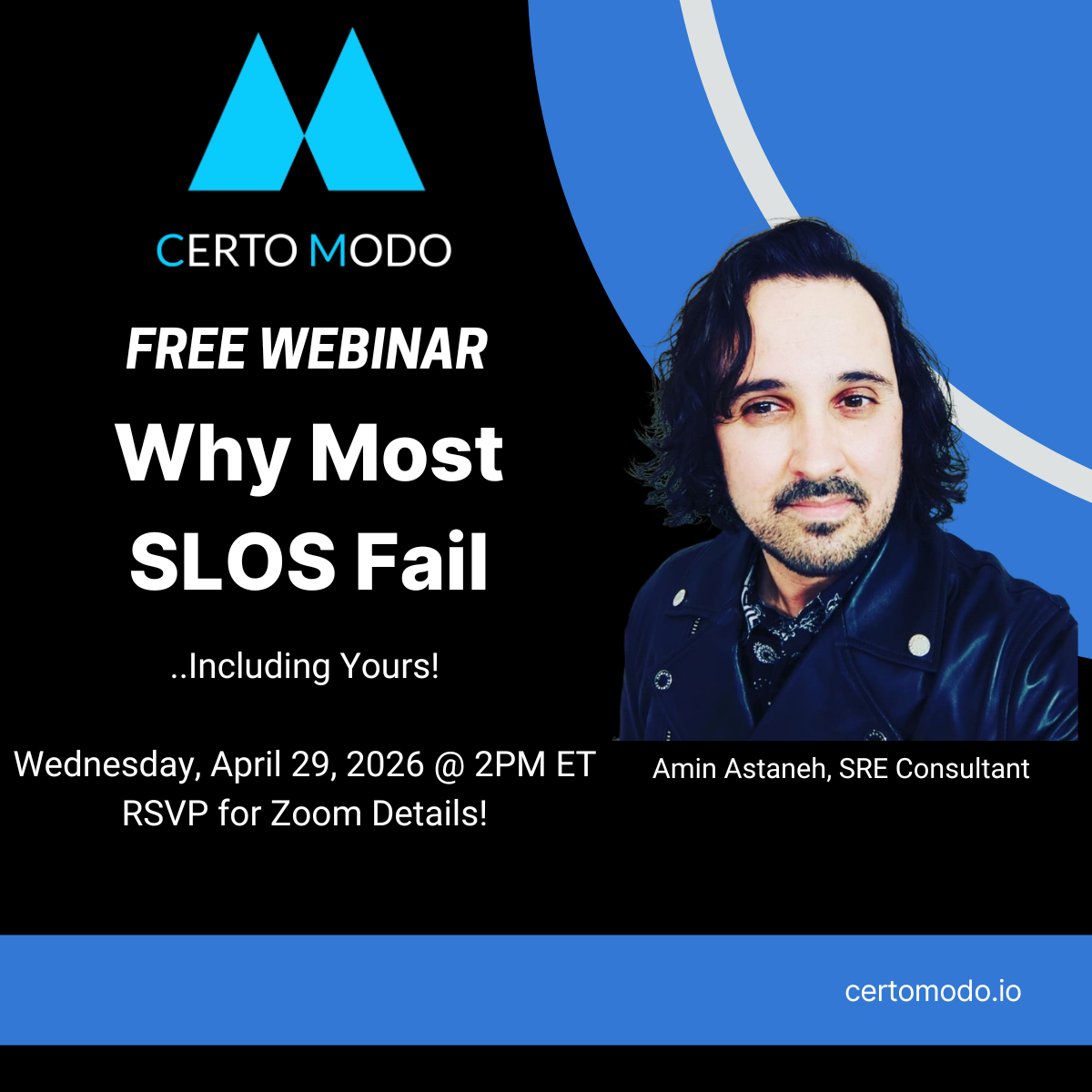
60-minute live session: 40-minute presentation + 20-minute Q&A
The Problem
Your SRE team rolls out a set of Service Level Objectives. They carefully designed the indicators, built the metrics and dashboards. Maybe even got engineering leadership to sign off.
Meanwhile, customers are still frustrated with the reliability of the service, and are filing the same tickets they were a year ago.
SRE literature places SLO as the cornerstone of mature production operations. And yet in the field, they rarely bear fruit. The real pattern I see walking into organizations: SRE teams end up owning incident response for the very services they defined SLOs for- which is exactly backwards. SLOs were supposed to make reliability a shared responsibility across software engineers, product managers, and operators. Instead, they become one more thing only SRE tracks.
I asked SRE practitioners directly, and 72% told me their organization responds to SLO violations by reprioritizing the roadmap or enforcing error budget policy.
But in my experience taking a closer look at similar organizations as part of my consulting work- totally different picture. I can only guess people don’t want to report that things aren’t going well in a public poll.
SLOs aren’t failing because of bad metrics or tools. They’re failing because reliability has no seat at the table in how decisions get made.
SLOs are completely useless unless they inform your roadmap, period.
The Ways SLO Implementations Die
Most SLO failures trace back to a surprisingly small set of organizational patterns. They’re nearly invisible from the outside, and almost always misdiagnosed as a tooling problem.
“If only we had the right metrics.” “If only we had the right observability platform.” These are symptoms. The disease is organizational.
This webinar names the patterns- and shows you how to recognize them in your own organization before the next major outage does it for you.
What You’ll Learn
- Why SLO failure patterns are so easy to miss- until an outage makes them impossible to ignore
- Why the key question isn’t “are your SLOs defined?” but “who has authority to reprioritize work based on reliability data- and what happens to their career if they do?”
- A 5-level SLO maturity model you can use to assess where your org stands today
- Concrete steps for moving up the maturity curve- without a full reorg
Who Should Attend
- VPs and Directors of Engineering who’ve invested in SLOs and are still fielding customer escalations
- SRE and Platform Leaders whose SLOs, alerts, and dashboards aren’t changing how anyone works
- Engineering Managers trying to make reliability a shared responsibility- not just an SRE concern
- Product Managers who own roadmap decisions but have rarely been in the room when incidents happen
About Your Host
Amin Astaneh is the founder of Certo Modo, a DevOps/SRE consultancy serving enterprise SaaS companies. After 15 years building resilient systems from rocket ship startups to Big Tech (Meta, Acquia), he’s learned that reliability problems are rarely technical- they’re organizational.
He hosts the Reliability Rebels podcast and offers RAPID (Rapid Assessment of Production In-Depth)- a structured diagnostic that identifies exactly where your operations are misaligned- and which improvements create the biggest impact.